 Novig prices
Prediction markets vs sportsbooks for Bears games: where the price comes from
A sportsbook builds its margin into both sides; a prediction market matches traders and charges a fee, or none. What that means for $100 on the Bears.

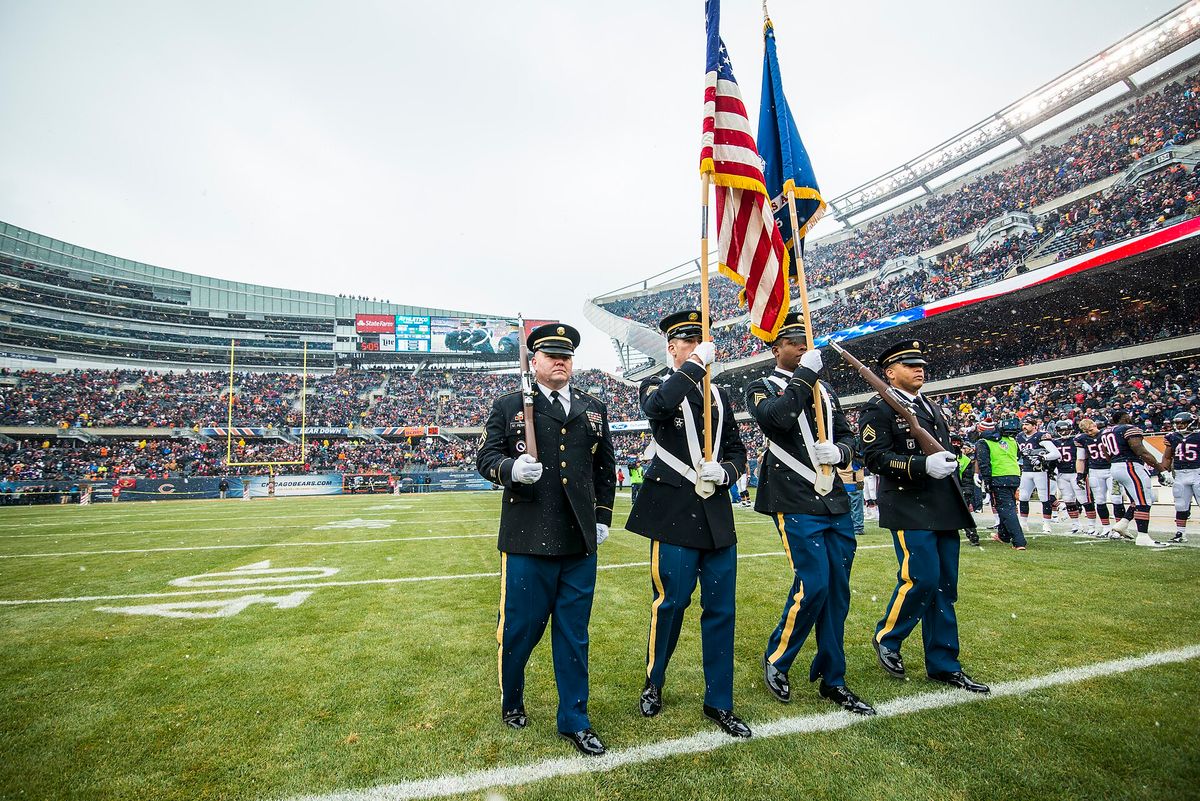
Two very different kinds of venue put a price on every Bears game. They arrive at that price from opposite ends, and the difference shows up in what a winning position pays. Illinois is one of the states where a fan can open both kinds, so the comparison is a practical one.
How a sportsbook prices a game
A sportsbook is the other side of your ticket. It sets the line, takes the opposite position on everything it accepts, and protects itself by shading both prices. A game it rates as a true coin flip is not posted at +100 each way; it is posted at -110 each way. Turn those prices into probabilities and they add to about 104.8%. The excess is the book's margin, the vig or hold, and it is there before anyone kicks off.
You never see it on a receipt; it sits inside the odds. DraftKings had Sunday night's game at Bears -278 and Buccaneers +225 as ESPN listed it at about 4:30 p.m. Eastern on Friday. As probabilities, those two prices sum to 104.3%: a hold of about 4.3% before a single position is taken.
How a prediction market prices it
A prediction market does not take the other side. It matches orders. A trader who expects Chicago to win is paired with one who expects it to lose, and the price is wherever their orders meet, quoted in cents as a probability. A Bears contract at 73 cents pays $1 if the Bears win. With no house book to protect, there is no reason to shade the line, and the two sides of an active market usually add to within a cent or two of $1.
The exchanges charge in different ways:
- Novig charges nothing on pre-game straight trades. Live (in-game) trades that take a resting order pay a taker fee that scales with price, 0.06 × price × (1 − price) per contract, the NFL included, and traders whose resting orders are filled pay nothing, per Novig's fee schedule as of November 2026.
- Kalshi charges a taker fee scaled by price on a 7% rate. It is largest on a coin flip and shrinks as one side becomes a heavy favorite.
- Polymarket US sets fees by market; read its schedule before trading.
One game, four returns
Suppose the Bears trade at 73 cents on an exchange, close to the 73.5% that DraftKings' -278 implies.
| Venue | Quote | Profit on a winning $100 |
|---|---|---|
| Prediction market, no fee (Novig pre-game) | 73¢ (about -270) | $36.99 |
| Sportsbook (DraftKings, Friday afternoon) | -278 | $35.97 |
| Novig, live taker trade (0.06 rate) | 73¢ | $34.80 |
| Prediction market, 7% fee rate (Kalshi) | 73¢ | $34.45 |
At the same 73-cent price, a 7% fee rate trims $2.54 per $100 off a winning position. The sportsbook takes its margin by moving the price rather than by adding a charge, and here it lands about a dollar behind the no-fee trade. The 73-cent exchange price is an illustration, not a quote; the board does this arithmetic on live prices for every Bears game and sorts each side from best return to worst. How to read the Bears board walks through the formula.
On a favorite as heavy as the Bears were on Friday, the gaps are small in dollars because the profit itself is small. They grow on the underdog side and on closer games, where a contract near 50 cents carries the largest fee and a sportsbook's -110 costs the most.
Why this matters in Illinois
Illinois licenses sportsbooks under its Sports Wagering Act, so the DraftKings, FanDuel, BetMGM and other sportsbook rows on the board are prices a fan in Chicago can actually take, at 21 and over. Those books pay the state's revenue tax plus a per-wager tax of 25 or 50 cents on online wagers, and some pass part of that on: FanDuel brought back a 50-cent charge on smaller wagers in October, Covers reported.
Prediction markets sit outside that system. The CFTC oversees them, not the Illinois Gaming Board, and that line is being fought over in court. A 2026 state law tried to license and tax them; a federal judge in Chicago blocked the state's rules in October, and Illinois has appealed. Illinois sports betting in 2026 has the details, and the Illinois page prices this week's Bears game at the venues a fan in the state can open.
Novig is available in 47 states, every one except Arizona, Michigan and Nevada. That matters for a Bears fan who travels to Detroit for the Thanksgiving game on Nov. 26: Novig does not work in Michigan. What new traders get on sign-up is set out on the Novig offer page.
What "no fee" does not promise
No fee does not guarantee a better price. On a prediction market the price comes from other traders and moves with them, and a thinly traded market can show a wider gap between the best buy and the best sell than a sportsbook's built-in margin. When that happens it shows up on the board, because the hold column measures every venue's two sides the same way. A Sunday night NFL game draws plenty of volume, so the gap is usually narrow, but the board measures it on every refresh rather than assuming it.
This site is for readers 21 and older. If gambling stops being fun, call 1-800-GAMBLER.